Monday, December 7, 2020

On The Anniversary Of The 2019 November Uprising In Iran

First Published in PlanC

By Collective98[1]

 “We are protesting against problems in the whole system in general. We reached a crisis where we noticed that the system cannot handle it anymore.”

  • A Chilean Protester[2] 

In mid-November last year, tens of thousands of people in over 100 cities across Iran took to the streets for five straight days. The uprising was in response to the overnight, three-fold increase of fuel prices, a policy recommended by the IMF and implemented through wanton state violence. The Revolutionary Guard, Basij[3], and the police killed 304 to 1500 people under the cover of an internet blackout[4]. Thousands of militants, activists, and ‘ordinary’ people were arrested either during or in the aftermath of the uprising, some of whom have been tortured, condemned to long sentences, and even executed. Yet, the dispossessed spontaneously staged occupations of local areas, built barricades, burned down several banks, and defended themselves the best they could against a state apparatus designed to systematically repress its ‘citizens’. In order to commemorate the first anniversary of the November Uprising, we attempt in the following to reflect on this political event while drawing out some lessons for the ongoing struggles in Iran and the Middle East.


Crisis and Violence

Those who rose up from the infernal depths of the social hell in Iran were fed up with the Islamic Republic of Iran (IRI) as a whole. Like the proletarians who shaped the global wave of struggles in 2018-2019, the participants of the November Uprising came to the conclusion that  “their future depends upon putting an end to a system that reproduces itself through exploitation, mass poverty, and the ever increasing commodification of the very basic means of life”[5]. That said, the crisis the IRI is now grappling with cannot be simply put down to the ‘crisis of legitimacy’. Nor are the US sanctions the sole cause. Rather, it is the question of a crisis of ‘governmentality’[6], that is, a socio-economic-political-ideological crisis aggravated by consequences of global warming and now compounded with the epidemiological crisis of COVID-19. The IRI can only resort to violence in order to silence millions of people are deprived of basic democratic rights and of the very basic means of social reproduction (housing, healthcare, education, employment, breathable air, and drinkable water…). Thus, the brutal repression of the November Uprising brought to light both the depth of the crisis and the degree of radicalization among the youth whose social existence has become increasingly unbearable. In some cities, and especially those inhabited by the racialized ethnic ‘minorities’ such as Arabs or Kurds, government tanks rolled through the streets while affiliated governmental forces employed heavy machine guns like the Dushka (DShK)[7]. Now, although the IRIhas its origins in the violence that inheres in every project of statecraft and continues to structurally depend on the violence proper to an authoritarian regime, the repression of the November Uprising was both shocking and unprecedented – the likes of which Iran’s domestic population has not seen since 1989, with the IRI’s consolidation of power in the wake of the Iran-Iraq War.

Given the unprecedented nature of state violence, the current situation in Iran is becoming more and more like the original phase of the IRI(1979-1989) when systematic state-violence was employed as a means of establishing the regime. Put in other terms, the power of the Islamist ‘revolutionaries’ could not have been consolidated without the ethno-nationalist war declared by Khomeini on the ethnic ‘minorities’ like Kurds, Arabs, and Turkmens; without the patriarchal war launched on women and their bodies (most obviously, the compulsory hijab); and of course without the massacre of thousands of political dissidents in prisons during the first decade of the post-revolutionary era. The current ‘return’ of this earlier era expresses itself best in the images and videos showing the police directly shooting demonstrators in the chest and the head during the November uprising, as well as in the regime’s executions of ‘ordinary’ people in the months that followed. And this in the context of its vastly shrinking support base compared to its earlier days.

The revolution will not be televised

The Islamic Republic is suffering from mass uprisings at a chronic rate, with every subsequent mobilization being more confrontational than the last. The November uprising in 2019 was much more widespread and ‘militant’ than that of 2017-2018, when leftist students in Tehran expressed for the first time the negation of the system as a whole: “reformists, hardliners, the game is over!”. More importantly, the IRI is encountering ever-increasing struggles and movements of workers, students, teachers, retirees, women, and ethnic and religious minorities. These two ‘levels’ of struggle – the spontaneous mass uprising and the more organized forms of resistance – are mutually interrelated. The former has radicalized the latter, making it more political than before. For instance, the demands of some parts of the working class have moved away from the improvement of the conditions of work, wages, and de-privatization and towards the autonomous management of factories and radical alternatives.

Unfortunately, both the crushing effects of the crisis and the political subjectivity of the oppressed are under- or misrepresented in the news media. Insofar as political agency is concerned, it is only via the figure of the human rights activist that narratives of political subjectivity find their way into the media. Meanwhile, the mainstream media often misrepresents the crisis as a product of the US sanctions, while in reality neoliberalism in Iran is structured by the systematic corruption of its ‘rentier’ ruling oligarchy as well as the integration of its economy within global capitalism. However, this is not to say that the imposed economic sanctions were insignificant, thereby underestimating its extremely destructive and negative impacts on the millions of lives in Iran. To the contrary, the current set of economic sanctions have not only deprived people of access to basic medicines for chronic illnesses, they have also effectively contributed to the spiralling depression of the Rial on the world-market. Economic sanctions have definitely intensified the crisis, yet they cannot be considered as its fundamental condition and ultimate cause. In spite of this fact, the IRI’s ideological strategy for justifying the economic crisis is to project all ‘domestic’ problems as ‘geo-political’, thus as problems originating outside of Iran and resulting from the actions undertaken by its imperialist enemies.

Pseudo-anti-imperialism

Despite the very real and reactionary threat posed by the imperialist powers, what needs to be properly addressed within the internationalist left is the IRI’s claim of being an ‘anti-imperialist’ state. Ever since the 1979 Revolution, the ruling classes in Iran have gained legitimacy through a manipulative ‘anti-imperialist’ discourse whereby the geopolitical interventions of the Revolutionary Guard (IRGC) in the region is justified as a deterrent to the US imperialism and its allies (particularly Israel and Saudi Arabia). This discourse gained a new momentum after the US imperialist atrocities in Iraq and Afghanistan and the consequent intensification of geopolitical rivalries in the region. It is this long-standing propaganda that has fooled certain fractions within the global left, essentially turning them into supporters of the IRI[8]. The ‘pseudo-anti-imperialists’ on the left either turn a blind eye to political repression and dispossession of people inside Iran or they acknowledge the ‘internal’ problems but effectively minimize them by maintaining that the ‘axis of resistance’ has a ‘priority’ over the ‘internal’ antagonisms within Iran, as if the IRI were a genuine anti-imperialist force…

These pseudo-anti-imperialists formulate the problem as a false binary: either we have to choose the camp of Iran, Assad, Hezbollah, and Russia/China or we are faced with the global empire of the US and its allies. They gloss over the IRI’s interventions in Iraq, Lebanon, Palestine, Syria, and Yemen, be it direct or indirect, through its military, economic, and ideological-political support of reactionary forces such as al-Ḥashd ash-Shaʿbī, Hezbollah, Hamas, Assad, and the Houthis. Pseudo-anti-imperialists oppose the US imperialism by uncritically defending the regional interventions of the IRI. The point, however, is not to ‘choose’ between the two monsters but rather find a ‘third way’ that goes beyond this false dualism. The October Revolution in Iraq[9] and the ongoing struggles in Iran paves the way for such an alternative by refuting both the IRI and its mercenaries on the one hand and the United States on the other. If the left believes in internationalism, then the ‘anti-imperialist’ mask needs to be taken off from the IRI’s persona. This can be done by lending voice to the struggles inside Iran and exposing the atrocities of the regime in the region, whilst simultaneously opposing the global empire of the US, China and Russia.


Footnotes and links

[1] We would like to give our special thanks to Jose Rosales who, comradely and generously, edited the text and made precious and insightful comments.

To contact the collective, drop an email to collective98@riseup.net.

For further details on Collective98, see:

https://collective98.blogspot.com/2020/11/collective-98-is-independent_25.html

[2] See the statement written by the Iranian diaspora and signed by more than 170 leftist militants and academics across the world:

https://roarmag.org/2019/11/25/leftists-worldwide-stand-by-the-protesters-in-iran/

[3] Militia organization of the IRGC

[4] The real number of the victims is not clear. The Amnesty has announced 304 but Reuters 1500 people. See the following links:

https://www.reuters.com/article/us-iran-protests-specialreport-idUSKBN1YR0QR

https://www.amnesty.org/en/latest/news/2020/03/iran-at-least-23-children-killed-by-security-forces-in-november-protests-new evidence/#:~:text=Protests%20erupted%20in%20Iran%20on,the%20protests%20using%20lethal%20force.

[5] See the ‘About Us’ of Collective98:

https://collective98.blogspot.com/2020/11/about-us.html

[6] See the interview with the two Iranian, anonymous comrades by one anonymous American comrade:

https://crimethinc.com/2020/10/08/iran-there-is-an-infinite-amount-of-hope-but-not-for-us-an-interview-discussing-the-pandemic-economic-crisis-repression-and-resistance-in-iran

[7] This happened in Mahshar, a majority-Arab city in the province of Khuzestan in the South of Iran which has a key strategically economic petroleum site. The protesters blocked the main road to this site. Another example is the video published on social media showing the Basij militia directly shooting the Kurdish protestors in Javaanrud, a Kurdish city in Kermanshah province.

[8] See the catastrophic article published in the ‘radical-left’ French platform in which General Soleimani was presented as a ‘hero’ who fought against the ISIS and the imperialist forces in the region:

https://acta.zone/mort-de-soleimani-et-realites-de-laxe-de-la-resistance/

[9] See: https://roarmag.org/essays/one-year-on-iraqs-revolutionary-spirit-is-still-alive/


Tuesday, December 1, 2020

خشونت پلیسی در فرانسه و لایحۀ قانون جامع امنیتی

دولت ماکرون لایحه ای را با عنوان «قانون جامع امنیتی» پیشنهاد داده که در دست بررسی و تصویب در مجلس سنای فرانسه ست. بر اساس مادۀ جنجالی ۲۴ این لایحه، انتشار تصاویر نیروهای پلیس به نحوی که چهره یا هویت آن‌ها افشا شود با جریمه نقدی و مجازات همراه خواهد بود – حداکثر یک سال زندان تعزیری و پرداخت جریمه ۴۵ هزار یورویی که شامل روزنامه نگاران و خبرنگاران نیز می شود. در بندهای دیگر این لایحه اشاره شده که پلیس می تواند از پهپادها بدون گرفتن مجوز از دادگاه استفاده کند، آزادی عملی که صراحتا بر نظارت امنیتی و پلیسی بر زندگی خصوصی و جمعی شهروندان، کنترل و مراقبت جامعه، می افزاید. همچنین استفاده از دوربین های تشخیصِ چهره در فضای عمومی قانونی خواهد شد. هرچند نخست وزیر فرانسه (ژان کستکس) از آمادگی احتمالی دولت برای عقب نشینی از ماده ۲۴ این لایحه قانونی خبر داده، اما تحلیلگران معتقدند با توجه به ترکیب محافظه کارانه کنونی مجلس سنای فرانسه و با در نظر گرفتن اینکه اکثریت سنا در دست حامیان دولت است، این قانون با احتمال زیاد تصویب خواهد شد. معترضین این لایحه را نافی حقوق و آزادیهای اجتماعی خود میدانند. به زعم خبرنگاران این لایحه تهدیدی جدی برای آزادی بیان در فرانسه ست و وکلا آن را در تناقض با قانون اساسی کشور تشخیص داده اند.

دولت این لایحۀ محافظه کارانه و سرکوب گر را زمانی دارد به تصویب می رساند که جنبش جلیقه زردها طی یک سال و نیم گذشته، یعنی از تاریخ ۱۷ نوامبر ۲۰۱۸ بدین سو، افشاگری های زیادی را درمورد خشونت پلیسی در فرانسه انجام داده. بر اساس آمار رسمی، حدود ۲۴۹۵ نفر در طی اعتراضات جلیقه زردها تا به حال زخمی شده اند. رسانه ای شدن تصاویر خشونت پلیسی و توجه عموم جامعه نسبت به این موضوع از خلال اعتراضات جلیقه زردها بر نفرت مردم از پلیس افزوده است. شعار معروف «همه مردم از پلیس متنفرند»، که جلیقه زردها بارها و بارها برای یکسال و اندی در خیابان فریاد زده اند، حالا به یکی از شعارهای فراگیر در تظاهرات های اعتراضی و مردمی در فرانسه بدل شده است. درست به همین دلیل دولت در صدد است تا مشروعیت ازدست رفتۀ پلیس بیش از این زیر سوال نرود و از خلال این لایحه چهره خشن پلیس را تطهیر کند. دولت نولیبرال ماکرون برای سرکوب های آتی خود به سرکوب هرچه بیشتر معترضین با مصونیت قانونی پلیس نیاز دارد. دولت خوب می داند جامعه فرانسه در یک بحران اقتصادی جدی به سر میبرد و با بیکارسازی و فقیرسازی برآمده از همه گیری کرونا به عمق نارضایتی ها نیز افزوده شده. جامعۀ فرانسه پیش از کرونا درگیر انواع و اقسام تضادهای اجتماعی، طبقاتی، نژادی و جنسیتی بود و اکنون به شکل بالقوه آبستن انواع اعتراضات و شورش است. این تضادها بعد از تمام شدن دوران قرنطینه و برگشتن جامعه به "وضعیت عادی" از نو سرباز خواهند کرد. لایحه اخیر نوعی آماده سازی پیشگیرانه برای خنثی کردن امکان های اعتراضی مردم بعد از دوران کروناست. از سوی دیگر، این لایحه پیشتر از سوی راستگرایان طرفدار سارکوزی برای دادن امتیازات بیشتر به پلیس و نهادهای امنیتی و نظارتی دنبال شده اما به نتیجه نرسیده بود. اینبار اما در فضای ساکن کرونایی و در حالی که ذهن افکار عمومی مشغول بیماری همه گیر اخیر و تبعات آن است، دولت نهایت بهره را برای انجام تغییرات مورد نظرش برده است. همزمان ماکرون در صدد است از طریق این لایحه و اصلاحاتی مشابه رأی راستگرایان در انتخابات بعدی ریاست جمهوری را نیز به سوی خود جذب کند.   


با تعمیق شدن بحران های سرمایه داری جهانی و کاربست خشونت دولتی عریان برای حل و فصل تضادهای اجتماعی، مسئلۀ خشونت پلیسی به شکل فزاینده ای به دغدغه ای عمومی و سیاسی بدل می شود. نمونۀ متأخر آن قتل نژادپرستانۀ جورج فلوید توسط پلیس بود که موج وسیعی از اعتراضات را به راه انداخت. به همان ترتیب در فرانسه نیز، خشونت پلیسی سیستماتیک به یکی از وجوه اصلی دولت فرانسه بدل شده است. در چند سال اخیر جوانان زیادی (اغلب سیاه پوست و مسلمان، خصوصا در مناطق حومه پاریس) به شکل غیرقانونی توسط پلیس در حین بازداشت به قتل رسیده اند. بر اساس آمارها، به طور میانگین هر سال در فرانسه، بیست نفر توسط نیروهای پلیس کشته و بیش از صد نفر زخمی میشوند. با این حال، تلاش خانوادۀ قربانیان و فعالین سیاسی برای اجرای عدالت و مجازات نیروهای پلیس به جایی نرسیده است. مبارزه این خانواده ها با همکاری فعالین مخالف نژادپرستی و گروه های سیاسی ای که برای رفع تبعیض در حومه ها مبارزه می کنند، ادامه دارد. از جمله کسانی که قربانی خشونت پلیسی بوده اند، آداما ترائوره (Adama Traoré) یک سیاه پوست ۲۴ ساله فرانسوی بود که در سال ۲۰۱۶ در یکی از حومه های پاریس هنگامی که در بازداشت موقت بود، توسط سه پلیس فرانسوی کشته شد. کلکتیو «کمیته عدالت برای آداما» امروز یکی از فعالترین جریانات سیاسی فرانسه علیه نژادپرستی و خشونت پلیسی به شمار میرود. خانواده آداما این کمیته را برای خون خواهی، اجرای عدالت و محکوم کردن قاتلین آداما تشکیل دادند. تا کنون اما نظام قضایی فرانسه هیچ یک از این پلیس ها را محکوم نکرده است. در روزهای اخیر همچنین انتشار تصاویری از ضرب و شتم و فحاشی غیر قانونی ماموران پلیس علیه یک مرد سیاهپوست با نام «میشل زکلر» موج گسترده ای از اعتراضات فعالین سیاسی و مدنی فرانسه را بدنبال داشته است. پلیس به بهانۀ نداشتن ماسک به وقیح ترین شکل ممکن این فرد را مورد آزار و اذیت نژادپرستانه قرار داد (ویدئو پیوست شده است). فیلم منتشر شده چنان تکان دهنده بود که  وزیر کشور چهار مأمور پلیس را موقتاً از خدمات دولتی تعلیق کرد و امانوئل ماکرون، رئیس جمهوری فرانسه مجبور شد این حمله را غیرقابل قبول بخواند. در موردی دیگر، پلیس با زور و خشونتی فزاینده اردوگاه سه هزار نفری در شمال پاریس را تخلیه کرد. برخی از این پناهجویان، که به نشانه اعتراض و با همکاری برخی از سازمان های مدافع مهاجران در میدان رپوبلیک چادر زدند، با مداخله خشونت آمیز پلیس و با گاز اشک‌آور و باتوم و ضرب و شتم به زور از چادرهایشان بیرون کشیده و از میدان بیرون رانده شدند. روزنامه نگاران زیادی نیز در این حادثه مورد خشونت قرار گرفتند که تصاویر آنها سندی دیگری ست بر نقض آزادی بیان توسط نیروهای پلیس فرانسه. وزیر کشور فرانسه در صفحه توئیتر خود تصاویر منتشر شده از این اتفاق را «تکان‌دهنده» توصیف کرد.


اذعان سیاستمداران دولتی به خشونت دولتی خود مهر تاییدی ست بر این واقعیت که معضلی با نام «خشونت پلیسی» وجود دارد. دولت اما درعوض مواجهۀ جدی و پیدا کردن راه حلی واقعی، در صدد است کل مساله را انکار و از خلال این لایحه آن را «پنهان» کند تا پلیس بتواند در سکوتی رسانه خشونت بیشتری را به جامعه اعمال کند. با توجه به اینکه قربانیان اصلی خشونت پلیسی مهاجرین، مسلمانان، سیاه پوستان، ساکنین حومه ها و فعالین سیاسی معترض بوده اند، این اقشار از جامعه بیش از همه نگران تصویب لایحه مذکور هستند و آن را نوعی اعلام علنی جنگ از سوی دولت علیه خودشان میدانند. روز شنبه ۲۸ نوامبر ۲۰۲۰، بیش از ۲۰۰ هزار نفر معترض در پاریس و بسیاری از شهرهای فرانسه در مخالفت با لایحۀ دولت ماکرون با عنوان «قانون جامع امنیتی» تظاهرات و تجمعات اعتراضی برگزار کردند که در مواردی به درگیری شدید با نیروهای پلیس منجر شد. به نظر می آید در صورت پافشاری دولت برای حفظ و تصویب این لایحه قانونی، اتحادیه های کارگری، گروه های سیاسی مستقل و همچنین اعضای جنبش جلیقه زردها به صورت گسترده ای به اعتراضات بپیوندند.


.

Wednesday, November 25, 2020

About Us

Collective 98 is an independent, internationalist group that stands in opposition to the capitalist system as a whole and against all forms of domination and exploitation. Formed amidst the global crisis of capitalism and in response to the intensification of various inequalities across the globe, our collective is dedicated to supporting all the oppressed and their struggles. The focus, however, is on the authoritarian political system in Iran as mediated by the Middle East, the region that is suffocated by the rivalries between regional authoritarian regimes as well as global powers. 

Collective 98 borrows its name from “Aban” 98, the bloody uprisings of the downtrodden that traversed the whole country in November 2019 (1398 in the Iranian calendar). It is indicative of our commitment to the emancipatory causes of those who rose up from the infernal depths of Iranian society, constituting a ‘watershed’ in the history of people’s struggles against the Islamic Republic of Iran. It also expresses our solidarity with the people who understood well that their future depends upon putting an end to a system that reproduces itself through exploitation, mass poverty, and the ever increasing commodification of the very basic means of life. The pillars that hold this system afloat are built by the denial of basic political and civil rights, the execution and imprisonment of the dissidents, systematic subjugation of women, ‘centralist-unitary state’ based on Fars-Shi’ite chauvinism, racism and immigrant bashing (especially against Afghan immigrants), destruction of the environment, and of course political-economic-military interventions in the region. 

 Collective 98 believes that all forms of domination are inter-connected and thus none of the struggles – against ethnic, gender, sexual, religious, class and other forms of oppression – takes precedent over the other. We attribute as much importance to the struggles of women aganst patriarchy as we do with respect to students’ and workers’. Collective 98 attempts to play its own part in voicing the struggles of all the oppressed, ranging from teachers to precarious workers, from the unemployed and the retired to the Kolbars and beyond. 

Collective 98 seeks to develop a mutual relation between theory and practice, attempting to be neither an ‘action-orientated’ organization nor a group study. We pursue our objectives through online platforms and forums, through mobilizing and participating in demonstrations, and organizing meetings for critical interactions of ideas. Critique and organizing, thought and action, require above all the ‘general intellect’, mutual collaboration and inter-generational ‘exchanges’. With this in mind, and to avoid sectarianism, Collective 98 will attempt to build solidarities and maintain relations with all leftist, progressive and independent groups and militants both inside and outside the country (in particular those from the Middle East). Such solidarities are all the more necessary considering the sharpening of geopolitical conflicts as well as opportunism of reactionary forces. Whereas the latter, along with the support of global powers, dream about turning the wheels of history back, Collective 98 aspires to take part in mapping a way forward by learning from the achievements and failures of the past.

Tuesday, November 24, 2020

له باره ی ئیمه

کۆلێکتیڤی ٩٨، ناوەکەی لە سەرهەڵدانی خوێناویی بندەستان لە خەزەڵوەری ١٣٩٨ی هەتاوی وەرگرتووە. ئەم ناوە دەرخەری دەروەستبوونی ئێمەیە بە بکەرێتی ئەو ژن و پیاوە چەوساوانەی کە لە قووڵایی دۆزەخی کۆماری ئیسلامیی ئێراندا ڕاسان و لەدرێژەی ڕابوونی بەفرانباری ٩٦ی هەتاوی، خاڵێکی وەرچەرخانیان لە مێژووی مافخوازیی ڕەوای جەماوەریدا تۆمار کرد.

هەروەها ئەم ناوە دەربڕینی هاوڕێیەتی ئێمە لەگەڵ ئەو بندەستانەیە کە وا داهاتووی خۆیان بە کۆتاییهێنان بەو سیستەمە گرێ دەدەنەوە کە لەڕێگەی هەژاری، چەوساندنەوە و بێبەشکردنی کۆمەڵگە لە پێداویستییە بنچینەییەکانی ژیان، خۆی بەرهەم دەهێنێتەوە.

بناغەکانی ئەم سیستەمە پشتئەستوورە بە ڕەتکردنەوەی ئازادییە سیاسییەکان، دەستبەسەرکردن و لەسێدارەدانی دژبەرانی، سەرکوتی سیستەماتیکی ژنان، ناوەندئاژۆیی و ناسیۆناڵیزمی شێعی فارس‌تەوەر، ڕاسیزم و دژایەتی کردنی پەناخوازان (بەتایبەت دژی پەناخوازە ئەفغانستانییەکان)، تێکدانی ژینگە و هەروەتر دەستێوەردانی سەربازی، ئابووری و سیاسی لە ناوچەکەدا. کۆلێکتیڤی ٩٨ گرووپێکی چەپی ئینتێرناسیۆناڵی سەربەخۆیە کە لەپێناو بەگژداچوونەوەی سیستەمی سەرمایەداری و لە وەڵام بە هەڵکشانی هەرچی زیاتری دژوازییە جۆراوجۆرەکان و نایەکسانییەکان پێکهاتووە.

ئەم گرووپە لەهەمبەر هاوپشتی لەگەڵ هەموو بێبەشان و بندەستانی جیهان و خەباتەکەیاندا، خۆی بە پابەند دەزانێ. کرۆکی چالاکییەکانی ئێمە لەمەڕ سیستەمی سیاسی پاوانخوازی دەسەڵاتدار بەسەر جوگرافیای ئێران و لە پەیوەند لەگەڵ ناوچەی ڕۆژهەڵاتی ناڤیندایە کە بە دەستێوەردان و شەڕخوازیی دەوڵەتە جیهانیی و هەروەها ناوچەییەکان خەڵتانی خوێن کراوە.

کۆلێکتیڤی ٩٨ لەسەر ئەو باوەڕەیە کە خەبات دژ بە ستەمی ئێتنیکی، ڕەگەزی، ئایینی، چینایەتی و... لەیەک تەندراون و هیچکامیان لەوی دی سەرتر نییە. ئێمە هەر بەو ڕادەیەی کە داکۆکی لە خەباتە کرێکاری و خوێندکارییەکان دەکەین، لە خەباتی ژنانیش دژ بە پێکهاتە پیاوسالارانەکان بەرگری دەکەین. ئەم کۆلێکتیڤە هاوکات هەوڵ دەدات کە بەپێی توانای خۆی ببێتە دەنگی مافخوازانەی هەموو بندەستان لەوانە مامۆستایان، کرێکارانی کاتی، بێکاران، کۆڵبەران، خانەنشینان و هتد.

کۆلێکتیڤی ٩٨ بەدوای پێکهێنانی پێوەندییەکی دوولایەنە لە نێوان تیۆری و پراتیکدایە. نە بڕیارە تەنها ببێت بە جڤینێک کە هەموو چالاکییەکانی لە ئاکسیۆنەکاندا کورت دەبێتەوە  و نە دەشبێ بە گرووپێکی توێژینەوەیی ڕووت. ئێمە ئامانجە فرەڕەهەندەکانی خۆمان لەڕێگەی چالاکی ئینتەرنێتی، بەشداری لە خۆپیشاندانەکان، ڕێکخستنی ئاکسیۆن و ڕێکخستنی کۆبوونەوە جۆراوجۆرەکان بە مەبەستی ڕاگۆڕینەوەی ڕەخنەگرانە، بەرەو پێش دەبەین.

ڕەخنە و ڕێکخستن، هزر و پراتیک، پێویستی بە هاوبیری بەکۆمەڵ، هاوکاری دوولایەنە و پەیوەندی نێوان نەوەکان هەیە. هەر بۆیەش، ئەم کۆلێکتیڤە، لەپێناو دوورکەوتنەوە لە هەر چەشنە باڵباڵێن و سێکتاریزمێک، جەخت دەکاتەوە لەسەر درووستکردن و پاراستنی پەیوەندی لەگەڵ هەموو گرووپ و چالاکە چەپ، پێشکەوتنخواز و سەربەخۆکانی ناوەوە و دەرەوەی وڵات (بەتایبەت گرووپە چالاکەکانی ڕۆژهەڵاتی ناڤین). پێویستیی ئەم چەشنە پەیوەندییانە لە سۆنگەی چڕبوونەوەی ناکۆکی و ناتەبایی ژیۆپۆلەتیک و هەروەها هەلپەرستی هێزە کۆنەپەرستەکان، زیاتر لە جاران دەردەکەوێت. لەحاڵیکدا کە کۆنەپارێزی ناوخۆیی و دەرەکی بە هاودەستی لەگەڵ زلهێزە جیهانییەکان، دەیانهەوێ  چەرخی مێژوو بەرەو دواوە بگەڕێننەوە، کۆلێکتیڤی ٩٨ خوازیاری ئەوەیە کە لە نسکۆ و دەستکەوتەکانی ڕابردوو وانە وەربگرێت، بۆ ئەوەی هەنگاوێک بەرەو پێش باوێژێت.

دربارۀ ما

کلکتیو 98 نامش را از خیزش خونین تهیدستان در آبان 1398 گرفته است. این نام بیانگر تعهد ما به عاملیت زنان و مردان ستمدیده ای است که از اعماق جهنمِ جمهوری اسلامی ایران به پا خاسته و در امتداد دی ماه 96 نقطۀ عطفی را در تاریخ مبارزات برحق مردمی رقم زدند. همچنین این نام اعلام همراهی ما با فرودستانی ست که آیندۀ خود را در گرو پایان‌بخشیدن به نظامی می‌بینند که خود را با فقر، استثمار و محروم ساختن جامعه از امکانات پایه ای زندگی بازتولید می کند. پایه های چنین نظامی همچنین استوار است بر نفی آزادی های سیاسی، اعدام و زندانی کردن مخالفین، سرکوب سیستماتیک زنان، تمرکزگرایی و ناسیونالیسم شیعی فارس محور، راسیسم و مهاجرستیزی (به ویژه علیه مهاجران افغان)، تخریب محیط‌زیست و البته مداخلات نظامی، اقتصادی و سیاسی در منطقه.  

کلکتیو 98 یک گروه چپ انترناسیونالیست مستقل است با هدف مقابله با نظام سرمایه داری و همۀ اشکال سلطه، سرکوب و استثمار. سرمایه داری و در پاسخ به تشدید فزاینده انواع تضادها و بی عدالتی ها شکل گرفته است. این گروه خود را متعهد به همبستگی با همه فرودستان و ستمدیدگان جهان و مبارزات آنان می داند.تمرکز فعالیت های ما بر نظام سیاسیِ اقتدارگرای حاکم بر جغرافیای ایران در پیوندش با منطقۀ خاورمیانه خواهد بود، که با مداخلات و جنگ‌طلبی قدرت‌های جهانی و همچنین منطقه ای به خاک و خون کشیده شده است. 

 کلکتیو 98 بر این باور است که مبارزات علیه ستم‌های ملی، جنسیتی، جنسی، دینی، طبقاتی و ... درهم تنیده اند و هیچ یک بر دیگری تقدم ندارد. ما به همان اندازه از مبارزات زنان علیه مناسبات پدرسالار دفاع می‌کنیم که از مبارزات کارگری و دانشجویی. این کلکتیو همزمان به سهم خود می‌کوشد صدای حق‌طلبانۀ همه ستمدیگان – اعم از معلمان، بی ثبات کاران، بیکاران، کولبران، بازنشستگان و غیره – باشد.

کلکتیو 98 به دنبال برقراری رابطه‌ای متقابل بین تئوری و عمل است. نه صرفاً بناست تشکلی اکسیون محور باشد، نه یک گروه مطالعاتی. ما اهداف چندگانه خود را ازطریق فعالیت‌های اینترنتی، شرکت در تظاهرات‌ها، سازماندهی آکسیون‌ها، و برپایی جلسات مختلف برای تبادل انتقادیِ نظرات پیش می‌بریم. نقد و سازمان‌دهی، فکر و عمل، نیازمند خرد جمعی، همکاری متقابل و ارتباط بین نسلی ست. به همین خاطر، این کلکتیو ، در جهت دوری از هرنوع سکتاریسمی، بر ایجاد و حفظ ارتباط با همه ی گروهها و فعالان چپ، مترقی و مستقل داخل و خارج از کشور (بالاخص گروه‌های فعال خاورمیانه‌ای) تاکید می کند. ضرورت چنین پیوندهایی در پرتو تشدید نزاع های ژئوپولیتیک و همچنین فرصت‌طلبی نیروهای مرتجع، بیش از پیش آشکار می‌شود. درحالی که ارتجاع داخلی و خارجی همراه با قدرت‌های جهانی می‌خواهند چرخ‌های تاریخ را به عقب بازگردانند، کلکتیو 98 قصد دارد از شکست‌ها و دستاوردهای گذشته درس بیاموزد برای اینکه گامی به جلو برداشته شود.    


Saturday, July 18, 2020

تظاهرات علیه خشونت پلیسی در فرانسه

روز ۱۸ ژوئیه ۲۰۲۰،  چهار سال پس از مرگ آداما ترائوره، جوان سیاه‌پوست فرانسوی در یک پاسگاه ژاندارمری در ول-‌دآوز فرانسه،  هزاران نفر در همین شهر فرانسه به خیابان آمدند تا ضمن گرامیداشت یاد او، بار دیگر خواستار اجرای عدالت و مجازات پلیس‌هایی شوند که این جوان را به قتل رساندند.

این تظاهرات اعتراضی علیه خشونت پلیس و تبعیض و نابرابری به ابتکار «کمیته عدالت برای آداما» و گروهی از فعالان محیط زیستی برگزار شد،‌ در  شرایطی که پس از قتل جورج فلوید به دست یک افسر پلیس در آمریکا، فرانسه نیز در هفته‌های گذشته شاهد تظاهرات و اعتراضات گسترده علیه نژادپرستی بوده است.


جمعی از فعالان چپ نیز با شرکت در این تظاهرات، پلاکاردهایی را در اعتراض به اعدام و تبعیض در ایران به نمایش گذاردند و شعارهایی در محکومیت نژادپرستی و تبعیض علیه مهاجران افغانستانی و کولبرهای کرد در ایران  سردادند.

آنچه می‌بینید عکس‌های «#کولکتیو_۹۸» از تظاهرات ۱۸ ژوئیه فرانسه است. «#کولکتیو_۹۸» یک گروه انترناسیونالیستی مستقل است که پس از اعتراضات آبان ۹۸ برای مبارزه علیه صور مختلف ستم، استثمار و تبعیض در ایران و ثبت و آرشیو آنها شکل گرفته است. 


Sunday, March 8, 2020

هشت مارس 2020


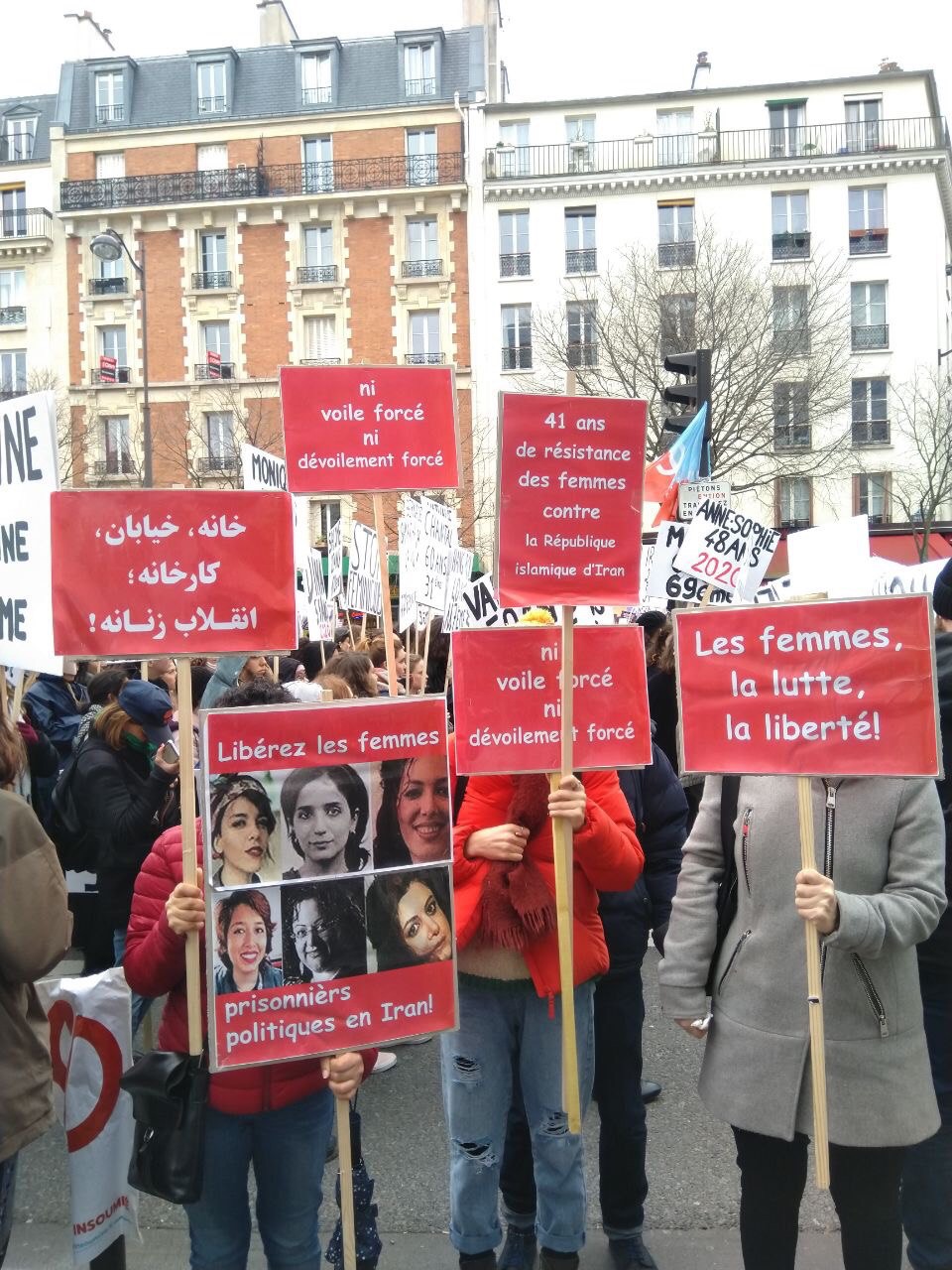
امروز یکشنبه #۸_مارس_۲۰۲۰ پاریس

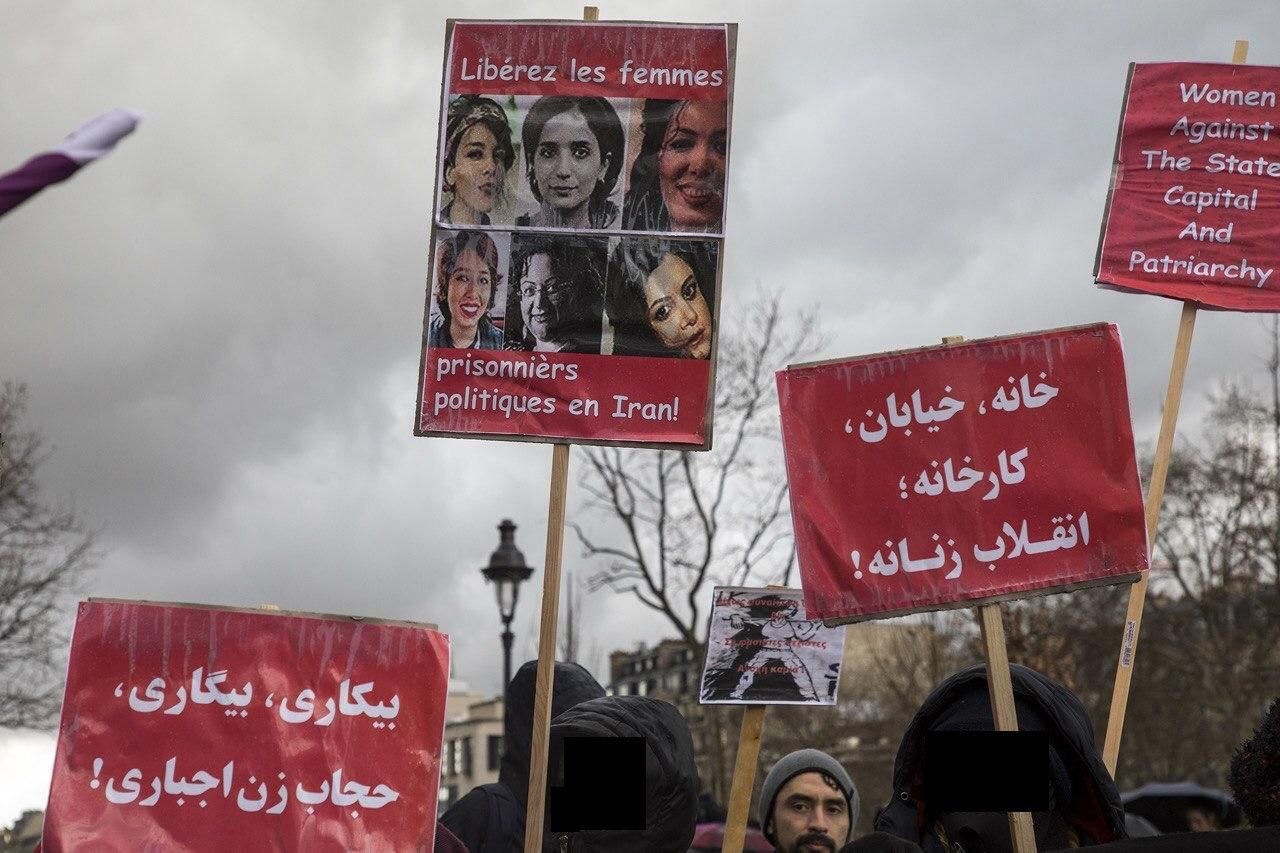
در تظاهرات روز جهانی زنان در پاریس، بلوک انترناسیونال همبستگی خود را با مبارزات زنان در ایران، بالاخص زندانیان زن سیاسی، اعلام کردند. شعارها به قرار زیر بودند:  

خانه، خیابان، کارخانه ؛ انقلاب زنانه 

بیکاری، بیگاری، حجاب زن اجباری

 بەرخۆدان ژیانه (مقاومت زندگی‌ست)

 Les femmes, la lutte, la liberté

ژین، ژیان، ئازادی

 ni voile forcé, ni dévoilement forcé 

نه به حجاب اجباری، نه به بی‌حجابی اجباری

41 ans de résistance des femmes contre la République islamique d'Iran

چهل‌ویک سال مقاومت زنان علیه جمهوری اسلامی ایران

There is no revolution without women's emancipation 

هیچ انقلابی درکار نخواهد بود مگر با رهایی زنان

Women against the State, Capital and Patriarchy

زنان علیه دولت، سرمایه و مردسالاری


کردستان و ماشین کشتار: اعترافات اجباری از اعضای کومله

ماشین کشتار جمهوری اسلامی بوی اعدام می‌دهد. اعدام‌ها قریب‌الوقوع اند. تا کنون 20 نفر، ازجمله چند کودک بلوچ، به محاربه محکوم شده اند و قوۀ ق...